

Daily Creative
Prompts for Elul 2025
with Rabbi Jordan Braunig
For the fourth year running, Jewish Studio Project is honored to partner with Rabbi Jordan Braunig to offer daily writing prompts throughout Elul. Daily prompts will appear in your inbox at 6 pm PT / 9 pm ET and be collected here for the 29 days of Elul. If you’d like to experience this journey with a loved one, have them sign up here!

Elul Day 29
I have never made miso. I have fermented all sorts of items from kombucha to sauerkraut, but somehow I’ve never tried my hand at fermenting soy bean paste. It is not a matter of ingredients; I am always looking for an excuse to go to H Mart. Instead, it is a matter of timing. Baking a sourdough takes about a day from start to finish. My kimchi is ready in a little less than a week. Beer and mead take a little bit of time, but they are ready to drink in a month. Miso, on the other hand, is about a year-long process. I’ve never felt like enough of a planner to undertake a culinary project that spans the seasons. What if we move? What if I’m not vigilant enough about watching out for mold? What if the whole damn thing falls apart?

Elul Day 28
The Buddhist teacher and practitioner, Sharon Salzberg once wrote, “When we open our hearts to pain and suffering, we begin to heal, not because suffering is redemptive but because opening our heart is.”

Elul Day 26
Deep in the symbolism of the yamim noraim, these days of awe that are headed our way, is the metaphor of a Divine writer. Over and over again throughout the season, we ask the Holy One to write us in the Book of Life. It is ridiculously anthropomorphic, but the idea of a Divine hand, quill and ink at the ready, is still quite powerful. We return to it, because, try as we will to be the authors of our lives, it can often feel like someone else is doing the writing. Yet, as someone who likes to write, who uses the creative process to understand and unpack my own experiences, I am drawn to the Kadosh Baruch Hu as a writer because it feels like such a validation. By writing, the logic would follow, I am living b’tzelem Elohim, in the image of the Divine.

Elul Day 25
The beginning of this week’s Torah portion, parashat Nitzavim, imagines all of the people standing together– young and old, leaders and ordinary folks, people of all genders, fellow travelers, laborers of different varieties (from wood-cutters to water-drawers). So, this feels like an appropriate time to consider who is with us on our own little trek through Elul.
Elul Day 24
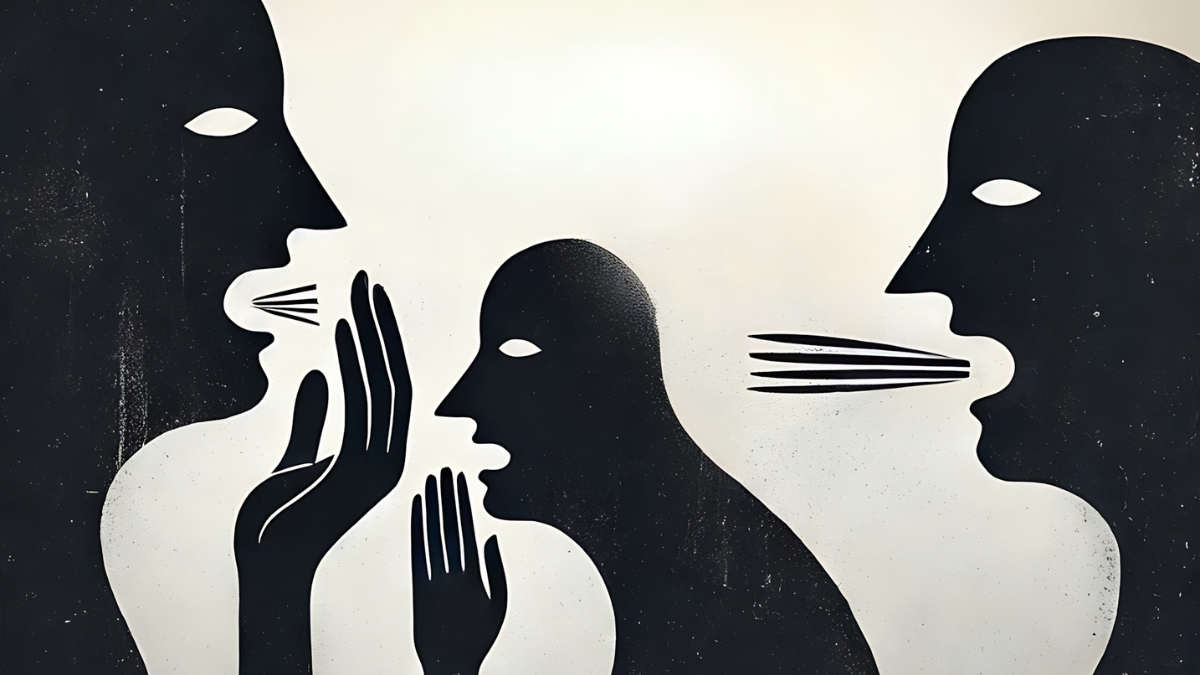
Is there anything more annoying than לשון הרע / lashon hara? The Hebrew term for gossip (literally, wicked tongue or evil speech) is a source of frustration for me on so many levels. To begin with, the notion of evil or wickedness, in and of itself, can feel so challenging and off-putting. I, for one, would love to grapple with gossip without having to contend with the problem of evil. Unkind or inconsiderate speech feels like a more apt description, and one that avoids questions of theology. Beyond issues of linguistics, teachings about lashon hara also tend to grate on my nerves.

Elul Day 23
Not so long ago, I was in a conversation with my 15 year-old and his cousin, who was also only a year or so out from her bat mitzvah. Somehow the conversation turned to Torah and I asked them if they felt like with the help of the app, Pocket Torah, they could use their skills to chant any parashah? They both looked at each other and then sort of looked down. I asked them what the issue was, and they both admitted to having deleted the app from their phones. Without consulting each other, they simultaneously said that Pocket Torah was taking up too much memory on their phones.

Elul Day 22
The forty days from Elul to Yom Kippur, according to our sages, correspond to Moses’ time ascending the mountain to receive the second set of tablets. The shofar blowing that is a part of this season is, in fact, meant to serve as a reminder not to be so impatient this time around. We hear the sound of the ram’s horn and we recall that Moses had not abandoned us, but, rather, was up on the mountaintop, communing with the Holy One, hewing stone, writing the law. Yet, when it comes to who exactly is doing the writing on these second tablets, the verses in the Torah are not completely clear.

Elul Day 21
As ever, I am enamored by the poetry of Wislawa Szymborska. This playful (but potent) poem speaks to the uniquely human emotion of remorse, and it has a splendid title.

Elul Day 19
Last year, just around this time, I heard my name being called from the bimah at synagogue. I was not receiving an aliyah. In fact, the Torah was actively being read. And there, in the midst of the not-most-compelling part of Ki Tavo was my Hebrew name,
Elul Day 18
Today we mark the 18th day of Elul, chai Elul. This day is celebrated by Chasidim, neo-Chasidim, the Chasidic-adjacent and the Chasid-curious because it marks the birth date of the Baal Shem Tov, the founding teacher of the 18th-century, Chasidic revival movement in Eastern Europe. The Baal Shem Tov (or BeShT) was an itinerant healer, rabbi, storyteller and awesome mystic. He inspired generations of students and followers who were moved by the notion that we might live our lives with a mindset that all of the world is filled by the Divine Immanence.

Elul Day 17
Only hours after arriving in Krakow this summer, without exactly meaning to, we found our way to the grave of R’ Moshe Isserles, the Rema. We had put our things down and wandered out to get our bearings in the Jewish quarter of Kazimierz where we were staying. Enjoying the complete disorientation, we wandered the cobblestone streets of the neighborhood past the cute cafes and funky bars that have come to define the area. Then, halfway down a block, through a wrought iron gate, we caught a glimpse of the old cemetery, stones jutting this way and that, dappled with the sunlight that filtered through the ancient oak trees.

Elul Day 16
I like to collect random minhagim and customs. Some I just stow away to occasionally pull out and delight in. Others are incorporated more fully into my life and the life of our family- we make them our own and act as if it’s always been so. This is how it is with the lulav that we shake during Sukkot. At some point, I read that it is customary to hold onto the lulav from the end of Sukkos in the Fall to erev Pesach in the Spring. Then, on the morning preceding the first night of Passover, when it is time to burn all of the remaining chametz in your possession, you use the lulav to ignite the fire. I was immediately drawn to this custom because it feels like a way to most fully make use of the lulav; the palm-frond equivalent of hoof-to-horn thinking.

Elul Day 15
In the French writer, Anne Berest’s, remarkable and soul-stirring novelized memoir, The Postcard, the main character, Anne, attends her first Passover seder. She has, for most of her life, known that she is Jewish. Yet, it is a biographical fact that remains nebulous and never-fully-understood; more like a strange remnant of her lineage than an ethnic or religious identity. So, she finds herself, in her late-thirties or early-forties at a seder hosted by her new boyfriend. Some of her fellow guests welcome her warmly as a Pesach neophyte, while others treat her with not a small amount of suspicion. If the seder is at moments bumpy (aren’t they all), the experience, on the whole, proves utterly transformative to Anne.

Elul Day 14
Tonight we return to the shofar, to its song and to the teaching of the Shlah Hakadosh. When it comes to human inconsistency and messiness, there is no text that I return to more than Whitman’s Song of Myself. While we don’t need old Walt to tell us that we are a pile of contradictions, there is no denying that he says it quite well.

Elul Day 12
I am not sure why it took me so long to catch on to the joys of water propagation. One early winter day I was walking through my neighborhood when I encountered a small black bucket of freshly cut sticks with a sign on the bucket that read, “free.” I am no expert on the retail market for sticks, but, it’s fair to say I was not overly impressed by their generosity. It was only when I looked closer that I realized there was more written on the sign. These were cuttings from an angel’s trumpet plant. Place them in water, and within a matter of weeks they would put out roots and send new growth upwards.

Elul Day 11
From trees and shrubs, to clouds and sky, to birds and animals, insects, grasses, rocks and minerals, the poetry of Joy Harjo is profoundly connected to nature and to the eternal. Perhaps that is why her poems are such a balm in these times of disconnection and discord. As I write these lines, mid-morning, sun behind the clouds, crickets sing to me on the land of her people, the Muscogee/Creek nation. And, as ever, her words harmonize exquisitely with the sounds and rhythms of the earth. I came across this short poem of Harjo’s recently and wanted to share it with you.

Elul Day 10
You won’t find the month of Elul in the Torah (insert collective gasp). This shouldn’t be altogether shocking– the month of Nissan, when we celebrate Pesach, is referred to biblically not as Nissan, but as chodesh ha’aviv, the month of Spring. The month of Tishrei, the very month that we are counting down to, the month that is at the center of our High Holy Days, is simply called chodesh ha’shevi’i, the seventh month. So, how does the Torah refer to Elul? Acharit shanah, year’s end; a designation that is derived from Devarim 11:12.

Elul Day 9
I had the honor of bringing in Rosh Hashanah last year with my nephew, Zusha. There aren’t the lines here that I would need to describe Zusha, but I will share that he is nineteen, he loves to dance, he watches too many ambulance videos on YouTube, he is wildly perceptive about other people’s emotions, he loves his family, he can put away some pumpkin ravioli, he is developmentally disabled, he adores Usher and Beyoncé and Whitney Houston, he is funny and fun and more than a little mischievous. Suffice it to say, hosting Zusha is a blast, as he is always looking for the next exciting thing to do.

Elul Day 8
When my next-door neighbor, Ed, an architect, asked me if I’d ever encountered Mostafavi and Leatherbarrow’s important work on the temporality of architecture, On Weathering, I let him know that I had never read any important works on the temporality of architecture. Sadly, my knowledge of architecture is limited to being able to distinguish between doric, ionic and corinthian columns, a lesson that was repeated an oddly large number of times during my early education. But, I let him know that, based on the title alone, I felt certain I would enjoy having a look at On Weathering. A few days later, he left his copy on our doorstep and I cracked it and, perhaps for the first time, I considered the temporality of architecture.

Elul Day 7
Hope you had a sweet and restful Shabbat.
I know that the majority of people who get these prompts use them for reflection, and not necessarily for journaling (quick sidenote, you never need to apologize for not writing!). That said, if you could see yourself picking up a pencil and paper four times this month, then I encourage you to use the prompts that I send out on motzei Shabbos. Each year, usually on Saturday nights, I come back to a drash on the different sounds of the shofar. The teaching comes from R’ Isaiah Horowitz, an early 17th Century sage and scholar, sometimes known as the Holy ShLaH (sick nickname). He teaches that the calls of the shofar correspond to the fourfold path of teshuvah/return.