
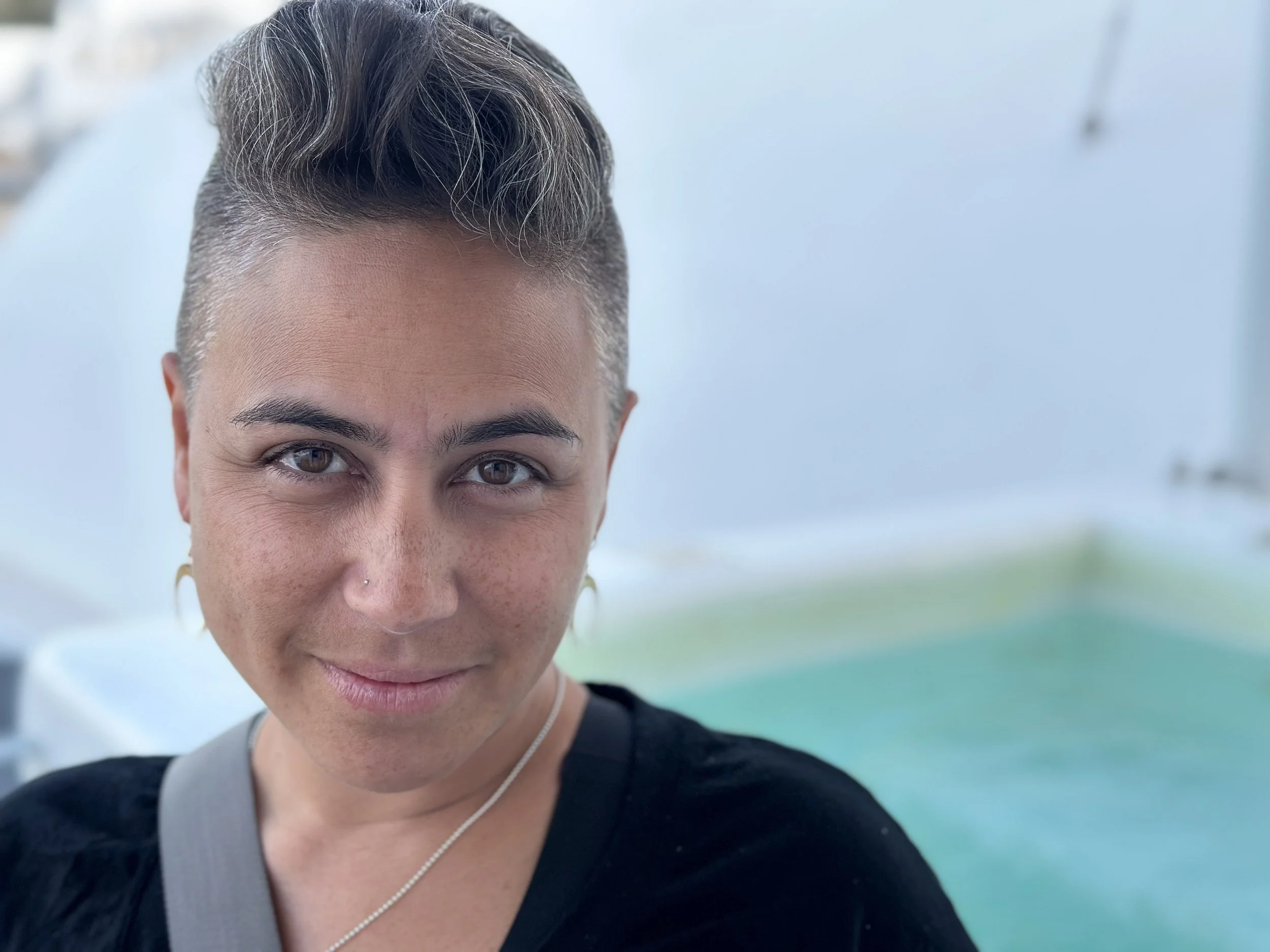
Keshira HaLev Fife
JSP Faculty
Keshira moved back to the States in 2018 after 13 years abroad, relearning the Jewish communal landscape from scratch. When she discovered JSP, one thing drew her in above all: a decades-long struggle with text study. “I’ve historically had a hard time with text study,” she said. “Sometimes it feels inaccessible to me, and not just the Hebrew. Sometimes even the translation feels inaccessible, like it wasn’t written for me.”
JSP offered her another way in. “JSP really helped me reclaim my relationship to text study and to broaden my understanding of what constitutes text and wisdom.” After training to be JSP facilitator, Keshira began bringing the process everywhere, including to lay leaders and board members, many of whom were not the typical JSP audience. She was nervous about how they would respond until one board member surprised her. He told her that as someone with little creative experience, he had been dreading the session and yet, by the end he had completely opened up to a new way of thinking and relating, of connecting to text and to his own Jewish spirituality.
For Keshira, that transformation points to something larger about the role of creativity in Jewish leadership. “The more that leaders engage in creative practice, the more it legitimizes creative practice as a modality of spirituality.”
JSP’s process, she says, invites people to move beyond intellectual engagement and into something more embodied: “We get to wrestle with truth, but not only in a way that’s cognitive, we get to bring it shoulders down into the body.” And that, she believes, is precisely what leadership needs: the willingness to experiment, to stay open, and to model uncertainty. She asks, “How can I model a form of leadership that might give permission to other people to also be more experimental, more creative, less sure of ourselves?”